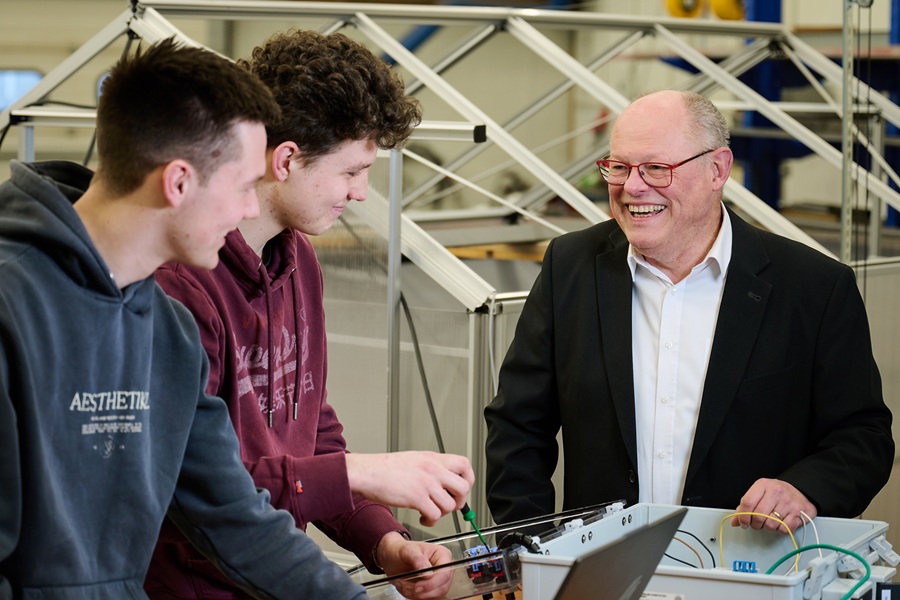
Less work out in the fields does not mean fewer employment opportunities. Kocks: "Employment in the green sector is being reshaped. Innovation in agriculture not only results in greater efficiency on the farm but also creates new jobs throughout the entire supply chain - from developing robots and software to engineering, technology and metalworking. This also requires new expertise from maintenance engineers and consultants."
Technology alone is not enough
According to the professor, at the same time technology alone cannot solve major challenges such as nitrogen emissions due to their complexity. However, innovation does enable better measurement and more conscious action to be taken to increase sustainability step by step. Sensors, for example, provide greater insight into agriculture and reveal the impact of certain decisions; which is vital for long-term management.
From technology to application
According to Kocks, innovation only delivers value if it is actionable and practical for entrepreneurs and their employees. To ensure this, Aeres not only studies the technology, but also its applicability, robustness and social acceptance. Will a weeding robot also function in bad weather conditions and is a system heavy-duty and robust enough for daily use? And how do you ensure that not only early adopters in agriculture are capable of working with advanced technology, but also a broader group of users?
Plant recognition and virus detection
The Precision Agriculture & Smart Farming research group conducts many practically oriented studies. Focus areas include further development of weeding robots and robotic weed control using tools such as improved algorithms to optimise plant recognition. For another client, the research group is developing an algorithm suitable for early detection of viruses in potato varieties.
Robotic systems are also playing an increasingly important role for landscape gardeners and green professionals, with examples including (partly) autonomous machines for mowing on steep slopes. This technology makes work safer and reduces physical strain, which is especially important with older employees as it enables more sustainable employability while retaining their experience and knowledge.
A special project is also taking place in the framework of the National Growth Fund for Regenerative Agriculture. Students and entrepreneurs are studying innovative combinations of horses and machinery, such as using horses to move a state-of-the-art weeding robot.
In the CropXR project, researchers and students are working on a mobile greenhouse that integrates technology, algorithm development and cultivation expertise.
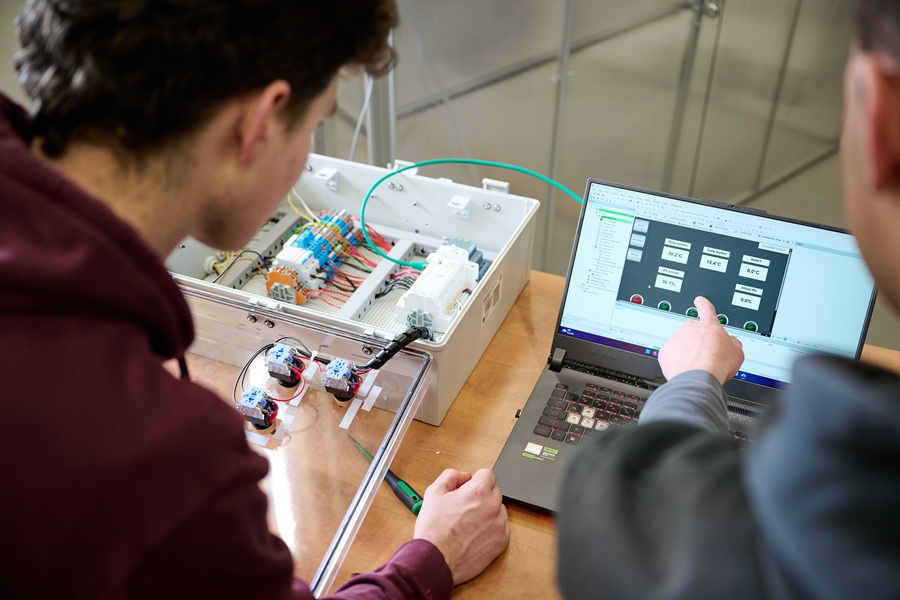
Students are working on a mobile greenhouse that integrates technology, algorithm development and cultivation expertise.
Stronger together
Technological innovation is advancing rapidly and is expensive. According to Kocks, wanting to achieve everything alone is unaffordable and unnecessary. "Aeres is happy to frequently collaborate with other educational institutions, the business community and the public sector, including through Groenpact. This cooperation offers immense added value. Aeres can utilise expertise from other educational institutions so that businesses and users can develop new applications. This concept of stronger together is the foundation for Aeres' investment in an Expertise Centre for Technology. This centre will offer a physical and virtual environment where students across the disciplines of secondary, higher vocational and university education can meet to address issues in agriculture facing SMEs and the authorities."
At the same time, partners turn to Aeres for knowledge and facilities in the field of agriculture, animals, food, healthy living environment, green education and technology. Aeres is investing heavily in research using research groups (Aeres University of Applied Sciences) and teacher-researchers (Aeres Vocational Education), with close links to practical situations. At sites including the Agri Innovation Campus in Dronten, where Aeres Farms is also located, innovations are immediately trialled and developed further. This enables students, lecturers and researchers to become green change-makers who not only use technology, but also help apply technology in practice.